A global movement.
Hundreds of communities.
One shared story.
The Centennial of the World Union for Progressive Judaism marks one hundred years of a global movement rooted in Jewish tradition, committed to equality, pluralism, and community.
Rather than a single event, this milestone is being celebrated by communities across the world, each in their own way.
From Shabbat gatherings and educational events to youth initiatives and cultural programs, the Centennial reflects the diversity and vitality of Progressive Judaism today.

"There is strength in our unity, our shared stories and history, and we all have an important role to play: to live our shared values and ideals; to lead by example; to focus our work locally and globally, doing the best we can to support each other."
Phyllis Dorey OAM, WUPJ Chair
Explore how Progressive Jewish communities around the world are celebrating this historic milestone.
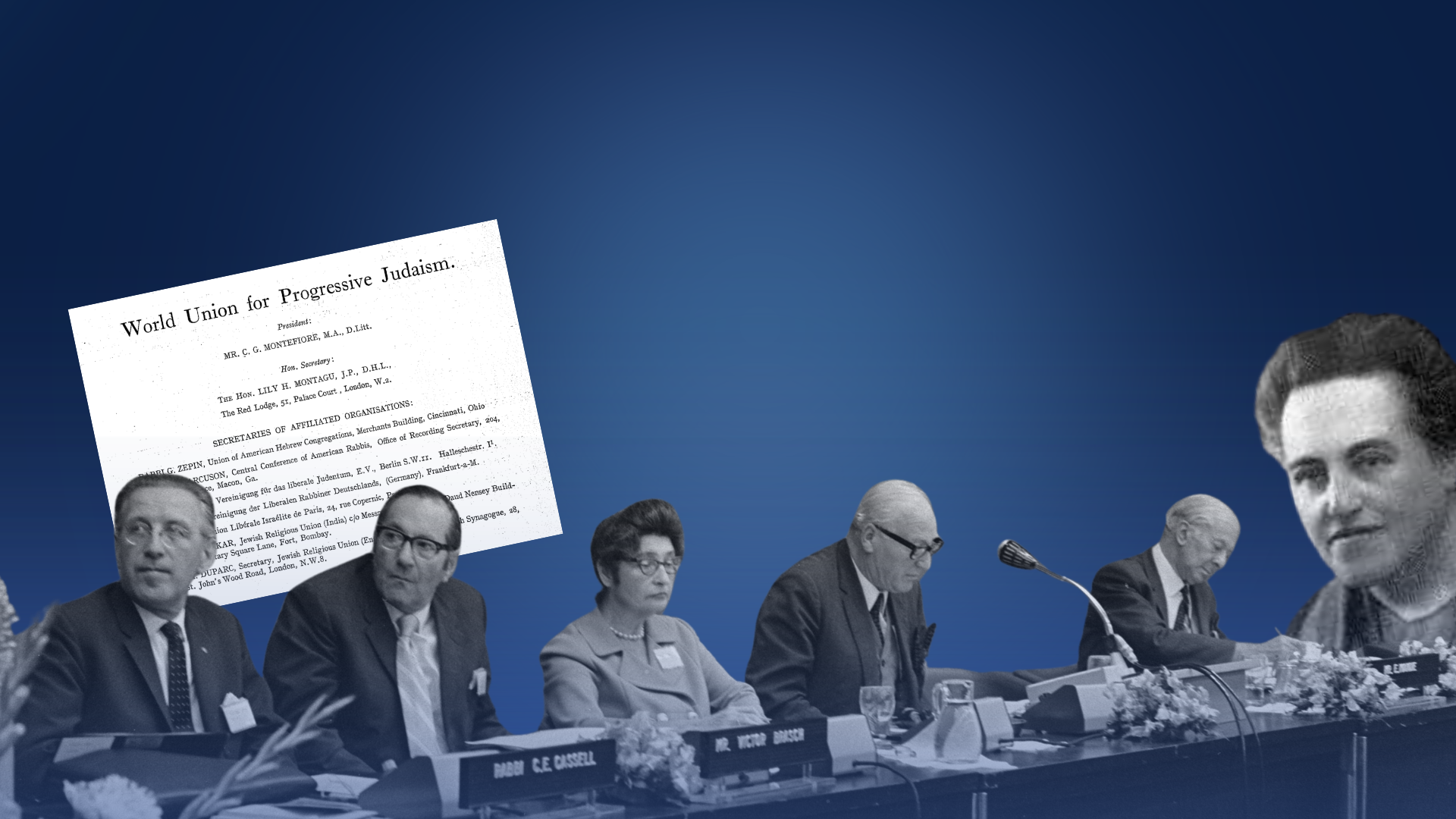
"The WUPJ would not be the organization it is today without the foresight of leaders who came before us. From the beginnings in Germany in the early 1800s, to Charleston South Carolina in 1824, then New York in 1834, and then in the 1840s to England, strong individuals and groups of Jews, shared a desire to change from the old interpretations of orthodox Judaism to a more inclusive, egalitarian, understandable and relevant practice of their faith within their own societies.
From its inception, the foundational leaders of the WUPJ - Hon Lily Montagu, a feminist, social worker, and a stalwart of religious reform in England, (who became the inaugural Secretary, and later Chair from 1954-58), together with Claude Montefiore (a scholar and nephew of Sir Moses
Montefiore), as Chair, from 1926-38) followed by Rabbi Leo Baeck (1938-54), and Rabbi Israel Mattuck (a Lithuanian born graduate of Cincinnati’s Hebrew Union College), - shared the trailblazing vision to create a global network of Progressive Judaism through the establishment and growth of Progressive communities around the world. This work had begun in the 1920s with rescuing rabbis and rabbinic students from Fascist Germany.
Today, each of the regions of the WUPJ is a tapestry of diversity: size, geographically, demographically, representationally within their own countries. They operate independently, and have different governance, employment and administrative structures from each other. Diverse, but strong, growing, powerful, courageous and proud.
Our work as leaders – professional and lay – is to continue to share that vision, from seeing what doesn’t yet exist, to strive to make it happen; to share in the work and responsibilities of our communities and organisations -small, large, established and emerging, to pass on the sense of relevance for the next generations, and to demonstrate, that no matter how hard it can be, good and holy things can emerge from our challenges.
There is strength in our unity, our shared stories and history, and we all have an important role to play: to live our shared values and ideals; to lead by example; to focus our work locally and globally, doing the best we can to support each other." Phyllis Dorey OAM, WUPJ Chair